2 min read –
Why Indonesia is Called Indonesia –
Colonial Invention –
Nationalist Pride –
Indonesia, meaning “islands of India” in ancient Greek, is not a native or colonial name chosen by the Dutch.
It was coined in the mid-19th century by two Britons: linguist George Windsor Earl and Scottish jurist James Richardson Logan.
In 1850, they proposed it as a distinct, convenient geographical term for the “Indian Archipelago” or “Malay Archipelago,” distinguishing the brown-skinned peoples of the region.
The Dutch continued calling their colony the “Dutch East Indies”.
What makes the name fascinating is the deep Indian (Sanskrit) cultural imprint across the archipelago long before this European label.
Java and other islands are dotted with Sanskrit-derived place names: Jakarta (originally Jayakarta, “victorious deed”), Yogyakarta (echoing Ayodhya), Surakarta, Indrapura (“city of Indra”), Martapura, and Singaraja.
Many Indonesian names, especially among Javanese, also trace back to Sanskrit roots.
Current President Prabowo Subianto’s first name derives from prabhava, meaning power or majesty.
Six of Indonesia’s eight presidents have carried such Javanese-Sanskrit names.
This reflects centuries of profound Indian influence.
From around the 4th–5th centuries CE, traders and ideas from India brought Hinduism and Buddhism to the region.
Ancient Indian epics like the Ramayana and Mahabharata were adapted into Old Javanese.
Majestic temples like Borobudur (Buddhist) and Prambanan (Hindu) stand as testaments.
The 14th-century Majapahit kingdom in East Java reached its zenith, projecting cultural and commercial influence across much of the modern Indonesian archipelago.
The name “Indonesia” gained traction in the early 20th century as indigenous elites, educated under colonial rule, sought unity.
Organizations incorporated “Indonesia” into their names, transforming the exonym into a powerful symbol of national identity.
It helped forge a shared sense of belonging across diverse ethnic groups, islands, and languages.
Modern Indonesia proudly draws on this Indo-Javanese heritage.
Its national motto, Bhinneka Tunggal Ika (“Unity in Diversity”), comes from a 14th-century Old Javanese poem on the unity of Buddha and Shiva.
The Garuda emblem is Vishnu’s mythical mount, and the red-and-white flag echoes ancient symbols.
As poet Rabindranath Tagore noted during his 1927 visit to Java: “I see India everywhere, but I don’t recognise it!”
Today, this blend of ancient Sanskrit roots, Hindu-Buddhist legacy, Islamic traditions (with distinct Javanese syncretic flavors), and modern nationalism defines a vibrant, multi-ethnic nation.
The name “Indonesia” reminds us how a 19th-century European invention became a cornerstone of 20th-century Asian identity.
We are CINTASIA, and we help you develop your sales and operations in Indonesia.
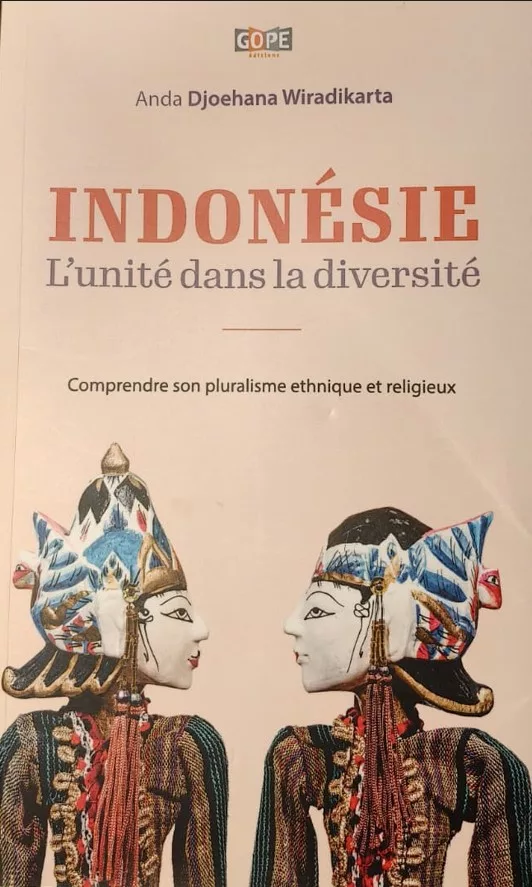
Picture: Anda Djoehana Wiradikarta’s book
Source & credit: Article by Anda Djoehana Wiradikarta on Asialyst