5 min read –
Removing 3 zeros from the ID Rupiah –
Economic Simplification?
Debasement Confession?
In the world of monetary policy, currency redenomination stands as a bold yet pragmatic tool for nations grappling with cumbersome financial systems.
At its core, redenomination involves recalibrating a currency’s nominal value, typically by knocking off zeros from banknotes and coins, without altering its actual purchasing power.
Imagine transforming Rp 10,000 into Rp 10; the value of your coffee remains the same, but transactions become much easier.
This process requires meticulous planning, including new note designs, public education campaigns, and a phased transition to avoid market disruptions.
Several countries have navigated this path successfully.
Turkey slashed six zeros from the lira in 2005, turning 1,000,000 old lira into 1 new lira to combat decades of high inflation.
Ghana followed suit in 2007, removing four zeros from the cedi for similar reasons.
Zimbabwe, amid hyperinflation chaos, executed multiple redenominations between 2006 and 2009, though with limited long-term success due to underlying economic distress.
Brazil trimmed three zeros from the cruzeiro real in 1994 as part of its stabilization plan.
A standout example is France’s 1960 redenomination of the franc.
Post-World War II, France endured persistent inflation that ballooned prices and eroded the franc’s usability, think everyday items costing hundreds or thousands of old francs.
By the late 1950s, the economy’s growth demanded reform.
In December 1958, under President Charles de Gaulle’s administration, the government announced the “nouveau franc” (new franc), effective January 1960.
Each new franc equaled 100 old francs, effectively dividing the currency by 100.
The Bank of France issued sleek new notes and coins, while old ones were exchanged over six years to ease the shift.
This wasn’t just cosmetic; it restored public confidence, simplified accounting for businesses, and aligned France with international trade norms during the European Economic Community’s formative years.
The transition was smooth, boosted by widespread media campaigns, and it symbolized France’s economic resurgence, paving the way for the stable growth of the Trente Glorieuses (the “Glorious Thirty” years of prosperity).
Why Do Countries Pursue Redenomination?
Nations opt for redenomination primarily to streamline bloated currencies born from chronic inflation, making daily commerce, bookkeeping, and international dealings more efficient.
It’s like decluttering a messy desk, fewer zeros mean quicker calculations, reduced errors in financial reporting, and lower printing costs for high-denomination notes.
Proponents highlight benefits for businesses, which gain from automated systems handling smaller numbers, and for consumers, who enjoy a psychological “feel-good” effect: a currency that looks stronger can bolster national pride and trust.
Governments benefit too, as it modernizes payment infrastructures and enhances competitiveness in global markets.
Ultimately, these gains accrue most to the formal economy (exporters, banks, and tech-savvy sectors) while fostering broader economic stability.
Yet, the cons are stark.
The upfront costs are staggering: redesigning currency, updating ATMs, software, and contracts can run into billions.
Transition periods risk confusion, with the public mistaking it for devaluation, sparking hoarding or panic buying.
Unscrupulous vendors will exploit the chaos to raise prices, fueling short-term inflation.
Small vendors and low-income groups, reliant on cash, bear the impact of adaptation without proportional gains.
And if not paired with fiscal reforms, it solves nothing long-term.
Does redenomination signal a debased currency?
Absolutely. It lays bare the erosive toll of inflation over time.
When a currency accumulates so many zeros that Rp 1 million barely buys a month’s groceries, it underscores decades of monetary expansion outpacing productivity.
But it also hides deeper truths: while it masks the symptoms of debasement, it doesn’t reverse it.
Success depends on addressing root causes like fiscal deficits or supply shocks; otherwise, zeros creep back, as in Zimbabwe.
In essence, redenomination reveals economic maturity only if executed as part of holistic reforms. Otherwise, it’s a cosmetic fix on a deteriorating foundation.
Indonesia’s Bold Move: Drivers, Gains, and Pitfalls
In Indonesia, Bank Indonesia (BI) has reignited the rupiah redenomination debate.
On November 7, 2025, the Finance Ministry confirmed via Regulation No. 70/2025 that the “Draft Law on Rupiah Value Change” is now embedded in the 2025–2029 National Medium-Term Legislative Program.
Spearheaded by BI’s proposal and led by the Directorate General of Treasury, the bill targets completion by 2027, proposing to strip three zeros from denominations without touching purchasing power.
This revives a dormant idea from 2013, shelved amid market volatility.
The drivers are quintessentially monetary and economic.
Indonesia’s rupiah, born in 1946 amid post-colonial turmoil, has shed over 99.9% of its value against the USD due to hyperinflation episodes (like 1960s peaks exceeding 600%) and steady 5-7% annual erosion.
Today, a Big Mac costs Rp 50,000, psychologically daunting and operationally cumbersome for a digitalizing economy.
The government cites BI’s push for transaction efficiency, rupiah credibility, and payment system modernization amid ASEAN integration.
It’s timed with stable macro conditions: 5% GDP growth, controlled inflation at 2-3%, and a maturing financial sector, signaling confidence in managing the shift.
Major benefits abound.
Businesses, especially SMEs handling millions in daily cash, will slash accounting errors and integrate faster with fintech.
Nationally, it fortifies rupiah resilience, attracts FDI by aligning with global standards, and cuts BI’s printing costs.
Exporters and urban professionals stand to gain most, as does the government through enhanced economic competitiveness and growth momentum.
Risks, however, loom large.
The 10-year timeline (including education) could balloon to trillions in rupiah for logistics and dual-currency circulation.
Public wariness (fueled by 1998 crisis memories) might trigger speculation or black-market stockpiling.
Rural and informal sectors, comprising 60% of the workforce, risk exclusion without tailored outreach, while price rounding could increase inflation by 1-2% temporarily.
Low-income households and cash-dependent vendors lose out if adaptation lags, exacerbating inequality.
Success demands ironclad Bank Indonesia (BI) coordination and anti-abuse laws.
A Maturing Giant or a Cautionary Signal?
Indonesia’s redenomination move joins a global chorus, from Turkey’s revival to France’s renaissance.
Yet, does it mean a maturing economy?
In many ways, yes, it’s good news.
At 16th globally by GDP, Indonesia’s pursuit reflects institutional confidence: BI’s technical preparedness, a stable rupiah (hovering at Rp 15,000/USD), and proactive policy amid digital transformation.
It underscores evolution from crisis-prone past to a diversified powerhouse, potentially unlocking 0.5-1% annual efficiency gains and signaling to investors that Jakarta prioritizes long-term resilience.
But peel back the layers, and it’s not all rosy.
It subtly spotlights persistent debasement, decades of commodity dependence and fiscal pressures that keep inflation simmering.
Without parallel reforms like subsidy rationalization or export diversification, it risks being symbolic.
Ultimately, if Indonesia threads this needle with transparency and equity, it could catalyze growth.
The world watches: will the “new” rupiah increase prosperity, or merely recount old tales?
What do you think? Tell us in the comments, on LinkedIn, link below.
We are Cintasia, and we help you develop your sales and operations successfully in Indonesia.
We specialize in technology and industrial equipment.
PS: If you enjoyed this article, check out our blog for more. We have published 150+ other articles.
Go to www.cintasia.com/news-insights
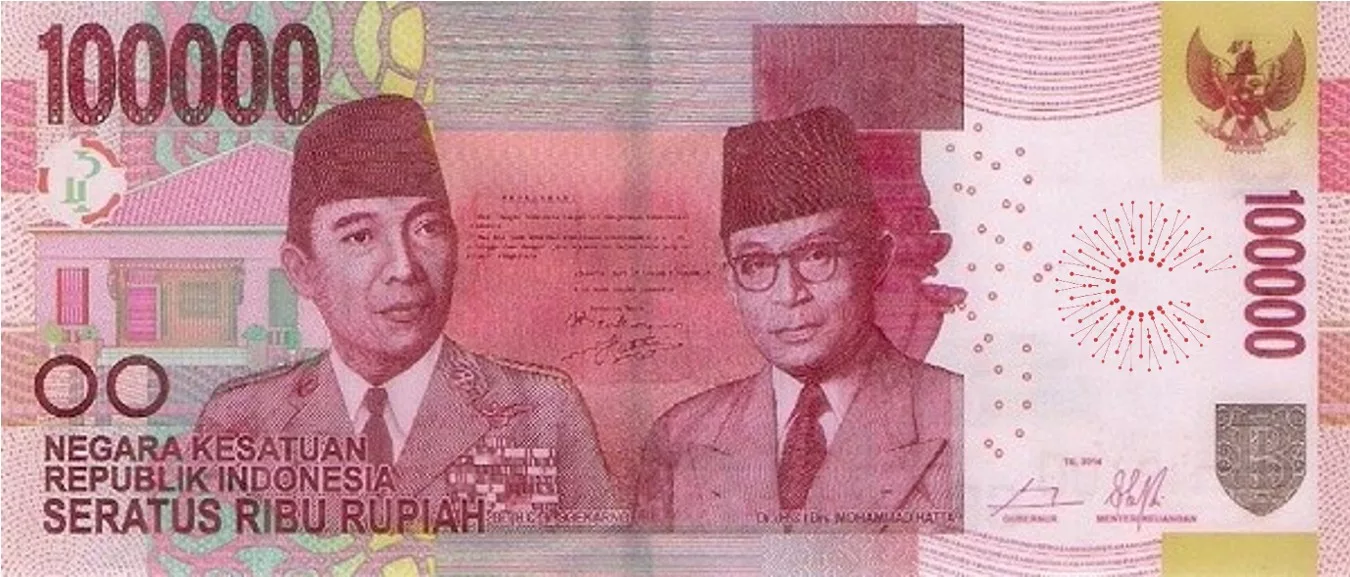
Picture: a 100 000 Indonesian Rupiah note, today worth about 6 USD.
The note on this picture is worth more actually because it bears our Cintasia stamp.