2 min read –
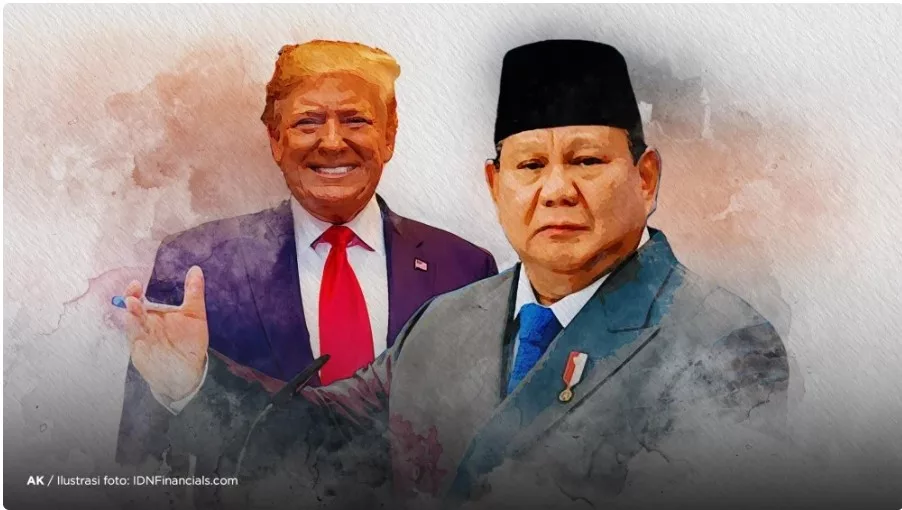
Prabowo’s visit to Washington –
What it means for Business –
For Trade and Tariffs –
Last week, President Prabowo Subianto traveled to Washington, D.C. to discuss trade, tariffs, market access, and investment.
Indonesia is seeking stronger access to the US market for its exports, while the US aims to expand access for its goods into Indonesia.
Both sides pushed for national interest.
Commercial agreements worth 38 billion USD were announced across sectors such as:
➡️ Strategic manufacturing supply chains
➡️ Energy and downstream processing
➡️ Critical minerals
➡️ Agribusiness
This aligns with Indonesia’s ambition to move up the value chain and reduce dependency on raw commodity exports.
By strengthening ties with Washington while maintaining relations with other global powers, Jakarta reinforces its role as a balancing actor in the Indo-Pacific.
This signals stability and strategic relevance, not alignment politics.
The US strengthens its foothold in Indonesia and diversifies supply chains.
Indonesia secures investment, technology opportunities, and greater geopolitical leverage.
Indonesia is positioning itself as a strategic industrial and supply-chain hub in the Indo-Pacific.
If you are watching Southeast Asia, this visit is a reminder that Indonesia is getting deeper global integration and growing confidence.
However, some concessions from Indonesia can raise questions.
Impossible to summarize all the discussions here, but let’s look at 2 examples.
No 1 – Indonesia agreed to purchase around USD 15 billion in energy commodities from the U.S. (including coal).
Indonesia is the world’s biggest exporter of thermal coal, how can it agree to import coal?
This sounds contradictory, but the reality is more complex.
Firstly, not all coal is the same.
Indonesia mainly exports thermal coal (for power generation).
The U.S. exports Metallurgical (coking) coal for steelmaking, higher-calorific thermal coal, and specialty coal grades.
If Indonesia agreed to import U.S. coal, it is likely for specific industrial uses (steel), or for blending to meet certain specifications
So this is not necessarily “buying what we already produce.”
And this purchase of energy is also a bargaining chip in the complete trade balancing.
No 2 – TKDN
Importing US goods is facilitated; US products and companies are exempted from local content requirement regulation (TKDN in Bahasa).
The US seems to win more.
However, let us wait until May; the MSCI threat might suddenly disappear, which would be a significant win for Indonesia.
Remember, Trump co-authored the book « The Art Of The Deal » (in 1997).
So when you negotiate with Trump, if you manage to cut your losses, it’s maybe not too bad after all.
We are CINTASIA, and we help you develop your sales and operations successfully in Indonesia.
We specialize in technology and industrial equipment.
*PS: Read what the MSCI threat is here: https://cintasia.com/2026-mining-insights-in-indonesia/
Picture: IDN Financials