2 min read –
French National Day –
Bastille Day, Revolution –
Liberty, Equality, Fraternity? –
Yesterday, I had the pleasure of attending the prestigious Bastille Day reception at the Raffles Hotel in Jakarta.
It was an excellent opportunity to celebrate France with friends and partners.
But it also reminded me of a simple question: do you know what the French have celebrated every 14 July since 1789?
The answer begins with one of the most famous events in modern history.
On 14 July 1789, Parisians stormed the Bastille, a medieval fortress and prison that symbolized the absolute power of the monarchy.
The event marked the beginning of the French Revolution.
A few years later, King Louis XVI and Queen Marie Antoinette were executed (beheaded using the notorious guillotine), ending centuries of royal rule and opening the path toward a new political order.
Why did it happen?
France was facing a severe financial crisis, poor harvests, and widespread poverty.
Meanwhile, the privileged clergy and nobility enjoyed tax exemptions while the vast majority of the population carried the burden.
The Bastille itself held only a handful of prisoners, but it represented arbitrary royal authority.
Its fall became a powerful symbol that the people were challenging an unequal system.
The Revolution gave birth to ideals that still define modern France: Liberty, Equality, and Fraternity.
It also abolished many inherited privileges and inspired democratic movements far beyond France.
Even the national anthem, La Marseillaise, reflects those turbulent days. Written in 1792 as a Revolutionary War song, its lyrics are remarkably violent, calling citizens to arms against tyranny.
They remind us that the birth of modern France was anything but peaceful.
More than two centuries later, Bastille Day is a celebration of these republican values rather than of the violence itself.
Yet history also offers a warning.
France, like many countries today, is experiencing widening economic and social inequalities.
History shows that when too many people are excluded while a small elite accumulates wealth and privilege, social tensions inevitably explode.
The problem is not inequality; it’s the excess of it.
The lesson of 1789 remains surprisingly relevant today: reducing inequality is not only a matter of fairness, it is also one of long-term stability and a way for the elite to escape the guillotine.
History often repeats itself, and ignoring its lessons has never been a wise strategy.
Allons enfants de la Patrie, le jour de gloire est arrivé!
Come, children of the fatherland, the day of glory has arrived!
We are CINTASIA, and we help you develop your sales and operations successfully in Indonesia.
We partner with Asia-Connect Executive Partners to solve your management, leadership, and execution challenges in Asia.
PS: We have published 200 other posts; visit www.cintasia.com/news-insights
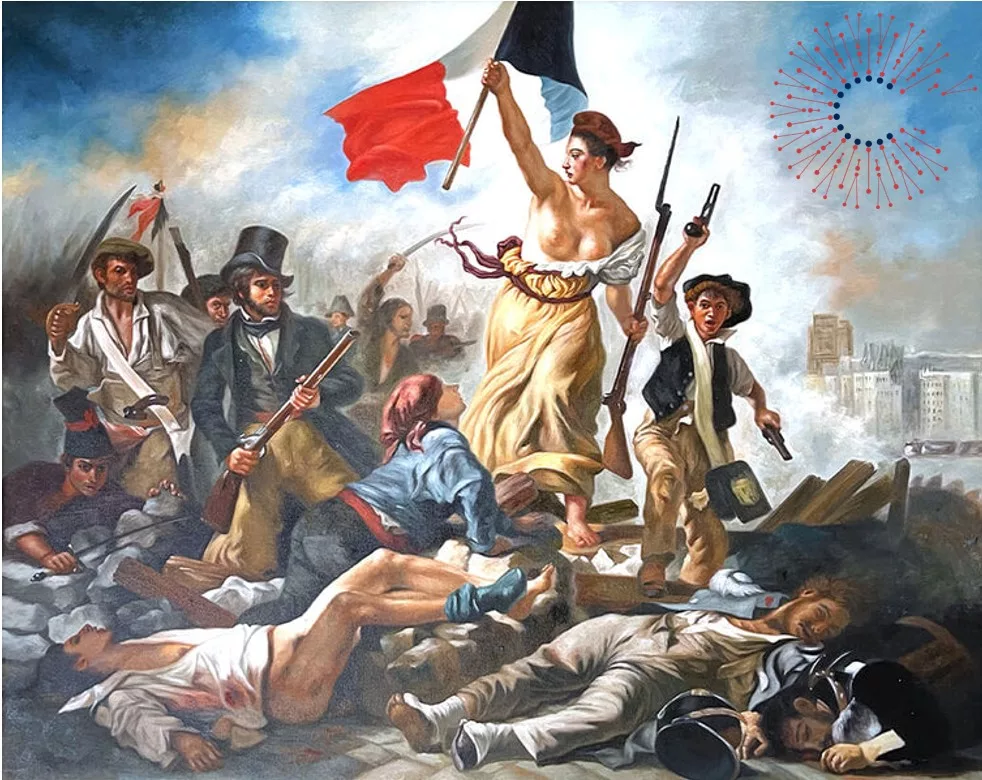
Picture: Painting by Eugène Delacroix, 1830, Liberty Leading the People.