2 min read –
Sulfur Prices & Iran Conflict –
The Gold of the Devil
And its Blue Fire
Since February 2026, global sulfur prices have surged more than 40% to around USD 600 per metric ton following the outbreak of war in Iran and the blockade of the Strait of Hormuz.
The Middle East accounts for nearly half of all seaborne sulfur trade, so the disruption has sent shockwaves through supply chains.
Sulfur is a bright yellow, non-metallic element.
Today, it is recovered mainly as a byproduct of oil and gas refining.
Roughly 85% is converted into sulfuric acid, which is essential for phosphate fertilisers, mining and metal leaching (especially nickel, copper, and lithium), rubber vulcanisation, chemicals, detergents, and pharmaceuticals.
China leads global production at approximately 19 million metric tons annually, followed by the USA, Russia, and Middle Eastern producers (Saudi Arabia, UAE, Qatar).
Indonesia ranks as the world’s largest sulfur importer, bringing in over 5 million tons in 2025 alone, driven by its massive fertiliser demand and expanding nickel processing.
Indonesian production remains negligible (not even in the top 30).
As a net importer, Indonesia is likely to suffer from sustained high prices.
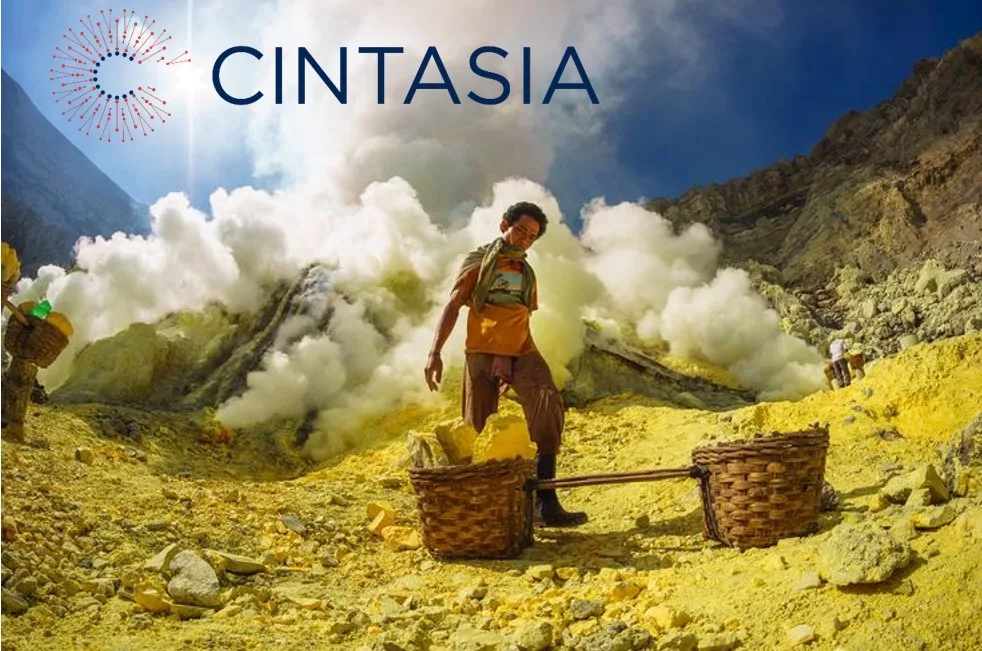
This global story, however, made me think of one of Indonesia’s striking natural assets: Kawah Ijen in East Java.
Part of an active volcanic complex, Kawah Ijen is famous for its turquoise lake and the ethereal blue flames produced by burning sulfur gases.
Since the 1960s, miners extract elemental sulfur manually, carrying 80 kg loads on their shoulders down steep, toxic paths for modest daily earnings.
Locally known as Devil’s gold, the sulfur feeds small-scale local factories (sugar, matches).
While Kawah Ijen has become a major tourist attraction showcasing Indonesia’s dramatic geology, its output is modest and does not alter the national supply at all.
It remains both a living cultural heritage and a symbol of traditional resource extraction.
Indonesia’s heavy dependence on imported sulfur serves as a powerful reminder that no nation operates in isolation.
In the long history of economics, the world has oscillated between phases of globalisation and protectionism.
Yet, whatever the prevailing trend, interdependence in global industrial supply chains remains inevitable.
Far from a weakness, this interconnectedness is a strength: it drives efficiency, fosters innovation, and encourages international collaboration.
We are CINTASIA, and we help you develop your sales and operations successfully in Indonesia.
We specialise in technology and industrial equipment.
PS: If you enjoyed this article, check out our blog for more. We have published 180+ other articles.
Go to https://cintasia.com/news-insights/